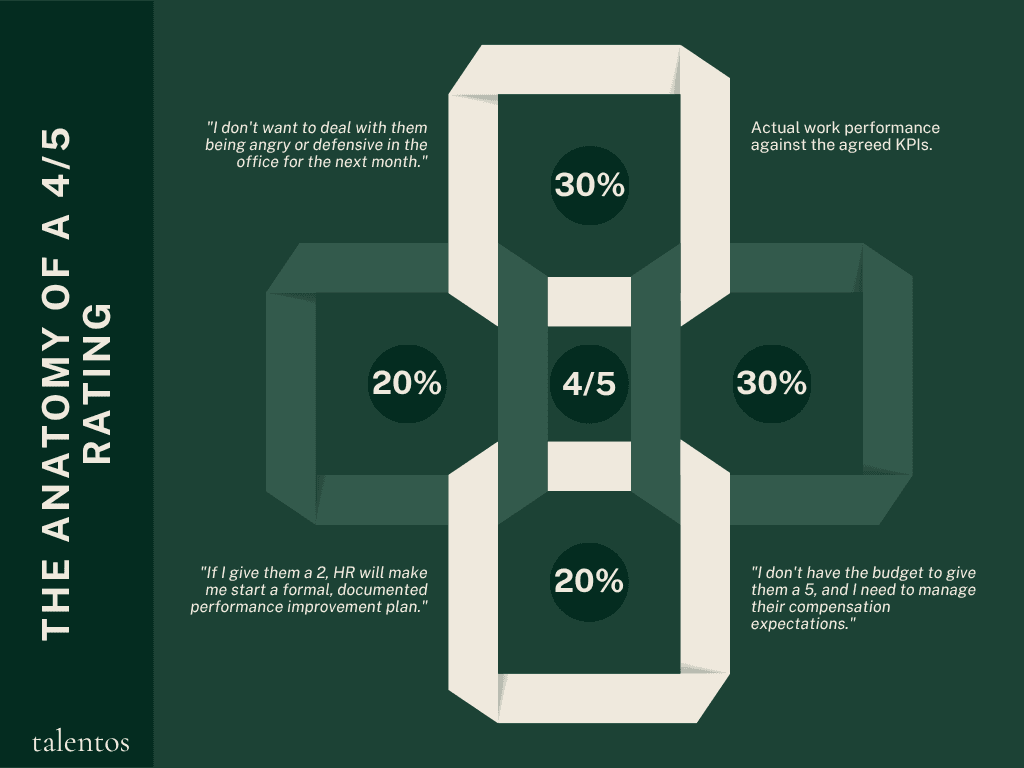
Look at the appraisal form most growing businesses use. There's a rating from 1 to 5, a section for achievements, areas for improvement, a salary recommendation, promotion potential and next year's objectives. The manager and the employee get an hour to cover all of it.
Now think about it from the employee's side. They know their salary depends on this meeting. The manager asks what they need to improve. If they're honest about a weakness, they may have just handed over a reason to cut their increase. So many people play it safe. The manager doesn't want an argument either, and plays it safe too. You end up with polite answers and vague notes that nobody uses.
The meeting is being asked to make several decisions at once, and to make them from memory.
What this looks like in a business of 25 people
Take a distribution business with about 25 staff, three supervisors and no HR manager. (This is an illustrative example, not a client.) One supervisor runs the warehouse, one runs sales and one runs deliveries. The founder decides salaries personally, and also signs off any improvement plan.
In December each supervisor fills in appraisal forms for their team. The warehouse supervisor works next to the same eight people every day. Giving one of them a 2 means a difficult January, and probably a smaller increase for someone whose family situation he knows well. The sales supervisor knows that a low score goes straight to the founder's desk. Neither of them kept notes during the year, so they rate from memory, and the most recent month weighs heavily.
The founder then sits with 22 forms. Almost everyone is a 3 or a 4. She can't tell who carried the business through the slow months and who coasted, so she adjusts pay based on her own impressions. The staff know this, which makes the appraisal feel like a formality.
What happens to the rating
Because the rating decides pay, promotion and sometimes discipline, managers start choosing ratings for their effects. You may recognise this kind of thinking:
- "She's doing well, but if I give her a 4 she'll expect a promotion we don't have." She gets a 3.
- "There's no budget for the increase that comes with a 5." He gets a 4.
- "A 2 means I have to start a formal process." He gets a 3 and a note about consistency.
After a few rounds of this, your ratings tell you which conversations managers want to avoid. They stop telling you how people actually performed.
One score for the year hides the direction
Take two employees with the same average score. One started badly and finished the year strong. The other started well and has been slipping since September. They need very different responses from you, and a single annual number makes them look the same. Our guide to reading department KPIs covers how to spot the direction behind a number.
Start with records kept through the year
The review at the end of the year should summarise what's already been discussed. It can't do that if nobody wrote anything down.
This doesn't need software. Once a month, each supervisor spends ten minutes with each person and writes four short lines: what was expected, what happened, what got in the way, and what was agreed. A notebook or a shared sheet is enough. In the distribution business above, that's about eight short conversations a month for each supervisor.
At year-end the supervisor reads twelve months of notes before rating anyone. The slow start and the strong finish are both there. So is the month the delivery van was off the road, which explains a dip that might otherwise have been held against the driver. And if someone has been missing targets since March, it was raised in March, so nothing comes up for the first time in the appraisal.
Then separate the decisions
With records in place, split the appraisal into three steps. They can all happen within a week or two.
- Review the year with the employee. Look at what was expected, what happened and what the notes show. Leave pay and promotion out of this conversation. If they performed well, write that down, even if there's no money for a big increase this year.
- Compare and decide as a management team. In a business this size, that's the founder and the three supervisors for an afternoon. Each supervisor brings their ratings and the notes behind them. Put the ratings side by side and ask what the evidence is for each one. If one supervisor has rated everyone a 4 and another has rated everyone a 3, talk it through until you're using the same standard. Then decide pay and promotion using the reviews, your budget and what the market pays.
- Meet the employee again to explain the pay decision and plan the year ahead. Tell them what was decided, what it was based on and any constraints, such as the budget. Give them room to ask questions. Then talk about their targets for next year, what they want to get better at and the support they'll need.
Separating the decisions lets you say things that sound contradictory but are fair: "You had an excellent year, and we can't afford a large increase right now." Or: "Your salary is moving up to the market rate, and there's a skill you need to build before we consider you for promotion."
It also lowers the pressure in the first conversation. It won't remove it. People know their record still matters for future pay, promotion and their job. How openly they talk about weaknesses depends a great deal on how their manager has behaved the rest of the year.
A new form won't fix this
Changing the appraisal form won't help if managers still wait until year-end to discuss performance. Moving from annual to quarterly reviews won't help much either if each one still mixes performance and pay and relies on memory.
What makes appraisals useful is managers who set expectations, check in regularly and write down what was agreed, month after month. Most founders know that. The hard part is making it happen with every supervisor, every month, without the founder chasing it. A business can have an appraisal form and an HR policy and still have no dependable way of managing performance.
That's the work Talentos does with founder-led businesses: building the habits and the simple records that make the year-end review a summary of what everyone already knows. The Performance Picture is a ten-working-day assessment that looks at whether expectations, check-ins and records are working across your business, and where they break down. You can also start with the free three-minute Quick Picture.
If someone is falling well short, don't wait for the appraisal cycle. Our guide to terminating an employee for poor performance in Kenya explains what the courts look for.